Feminine care forhotels and venues
Feminine-care service for hotels & hospitality is a scheduled washroom program, dispensers, sanitary disposal and restocking, from $1–3 per employee per year in product cost. Lobby washrooms are part of the guest experience, banquet weekends triple the traffic, and the housekeeping team has enough on its cart already.
How service runs for hotels & hospitality
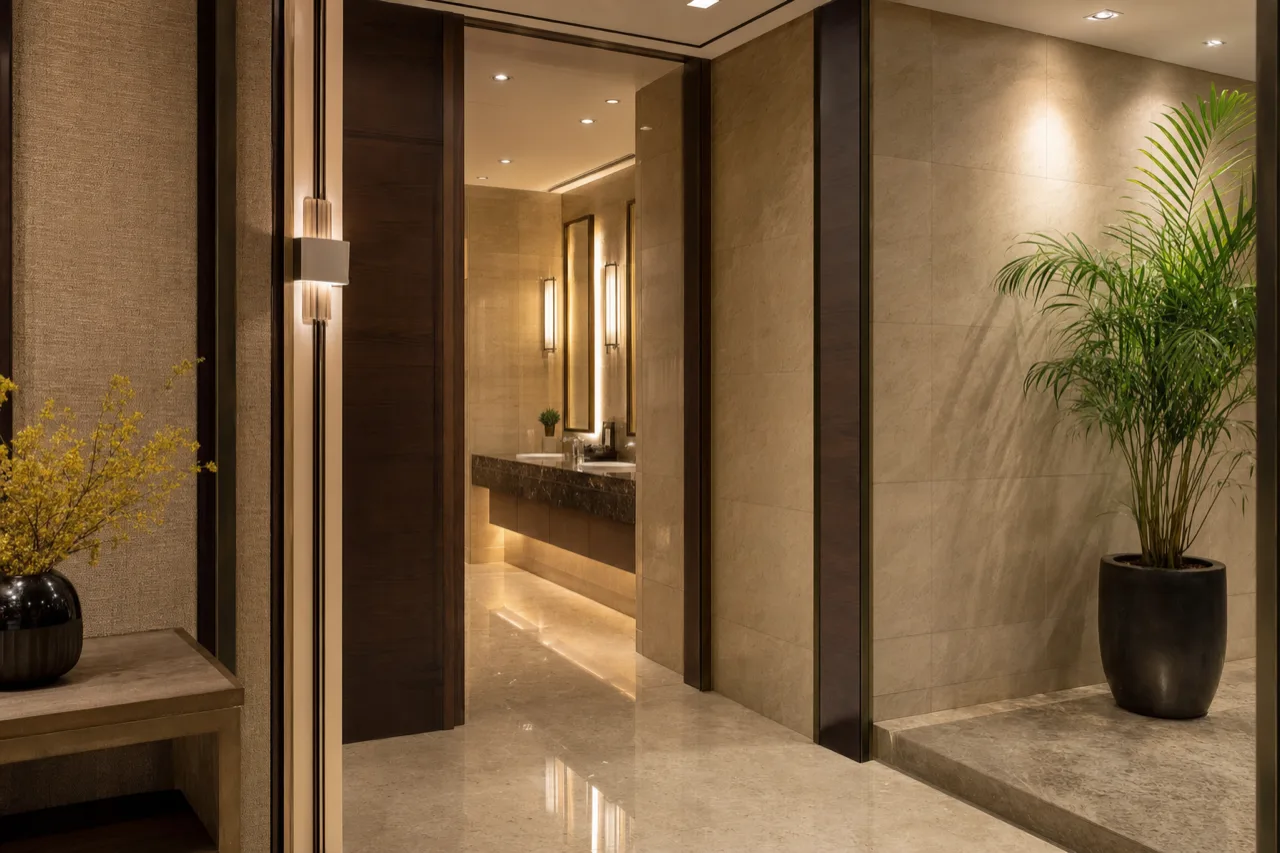
Hospitality demand follows bookings, not business hours: a conference weekend outdraws a quiet week ten to one, and the service calendar syncs to the events calendar. Guest-facing washrooms carry brand risk in a way back-of-house never does, and covered, serviced disposal in every stall is part of the room-standard a property advertises whether it means to or not.
Guest-facing standards
Event-driven demand
Event-based scheduling
Housekeeping hand-off
What the paperwork has to show
Whoever asks. A labour affairs officer, an accreditation surveyor, a tenant auditing CAM charges. The question is the same: can you show the routine, not just the result. Four artifacts answer it. Which stalls carry a covered receptacle, including accessible and single-occupancy rooms. The named service schedule per washroom. Dated visit records with fill levels, so an isolated overflow reads as an exception rather than the pattern. And the provider's downstream handling statement for the collected waste. A contracted route generates all four automatically; informal top-up arrangements generate none of them, and they cannot be reconstructed after a complaint lands.
Setting up a program for hotels & hospitality
Rollout starts with a walked washroom audit, because floor plans undercount: single-occupancy and accessible rooms get missed, and the count is the bill of materials. Dispensers and covered bins then go in during one pass per building, and the service schedule starts the same week. The gap between install and first restock is where programs stumble. Weeks three to eight are the measurement window: every visit logs consumption per washroom, and by week eight real usage replaces the launch estimate, usually tightening two or three washrooms and relaxing several others. Budget lands near $1–3 per employee per year in product, with dispensers a one-time item and service priced per bin per visit.