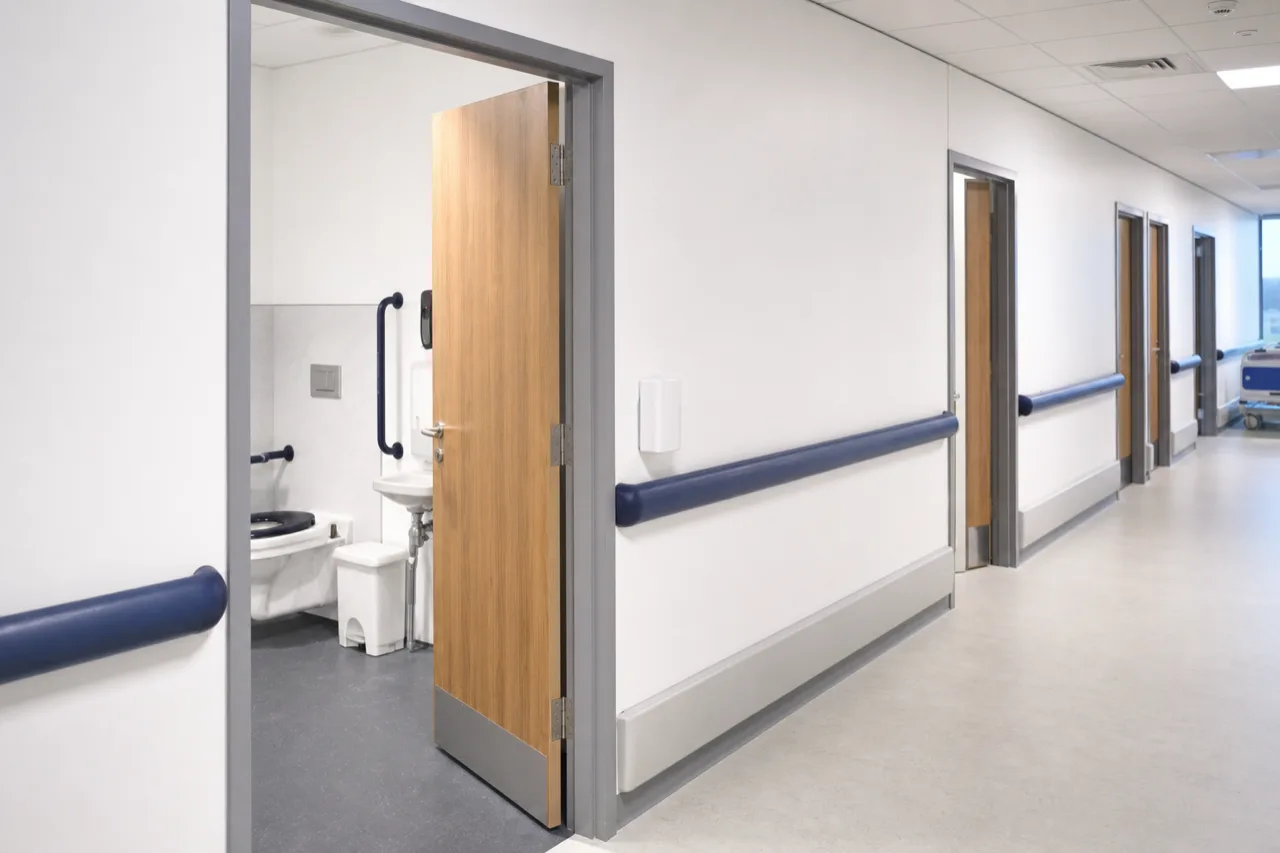
Feminine care forhealthcare facilities
Feminine-care service for healthcare & clinics is a scheduled washroom program, dispensers, sanitary disposal and restocking, from $1–3 per employee per year in product cost. Clinical environments hold washrooms to infection-prevention standards the rest of the market doesn't. And their audits check the paper as closely as the premises.
How service runs for healthcare & clinics
Healthcare washrooms run on infection-prevention logic: no-touch units only, full-unit exchange instead of empty-in-place, and service records that feed accreditation documentation. Surveys sample the paper trail, so an undocumented routine fails even when the washroom passes. The same standard scales from hospital floors to three-washroom clinics.
Infection-prevention grade
Accreditation alignment
Wall-mount 8 L, weekly
IPAC-ready documentation
What the paperwork has to show
Whoever asks. A labour affairs officer, an accreditation surveyor, a tenant auditing CAM charges. The question is the same: can you show the routine, not just the result. Four artifacts answer it. Which stalls carry a covered receptacle, including accessible and single-occupancy rooms. The named service schedule per washroom. Dated visit records with fill levels, so an isolated overflow reads as an exception rather than the pattern. And the provider's downstream handling statement for the collected waste. A contracted route generates all four automatically; informal top-up arrangements generate none of them, and they cannot be reconstructed after a complaint lands.
Setting up a program for healthcare & clinics
Rollout starts with a walked washroom audit, because floor plans undercount: single-occupancy and accessible rooms get missed, and the count is the bill of materials. Dispensers and covered bins then go in during one pass per building, and the service schedule starts the same week. The gap between install and first restock is where programs stumble. Weeks three to eight are the measurement window: every visit logs consumption per washroom, and by week eight real usage replaces the launch estimate, usually tightening two or three washrooms and relaxing several others. Budget lands near $1–3 per employee per year in product, with dispensers a one-time item and service priced per bin per visit.