Disposal binssized to traffic
Sanitary bins in three covered, lined, hands-free formats. The right size follows washroom traffic, not floor area. Sanitary bin collection rides the same route visit, and every unit is serviced on a documented cycle.
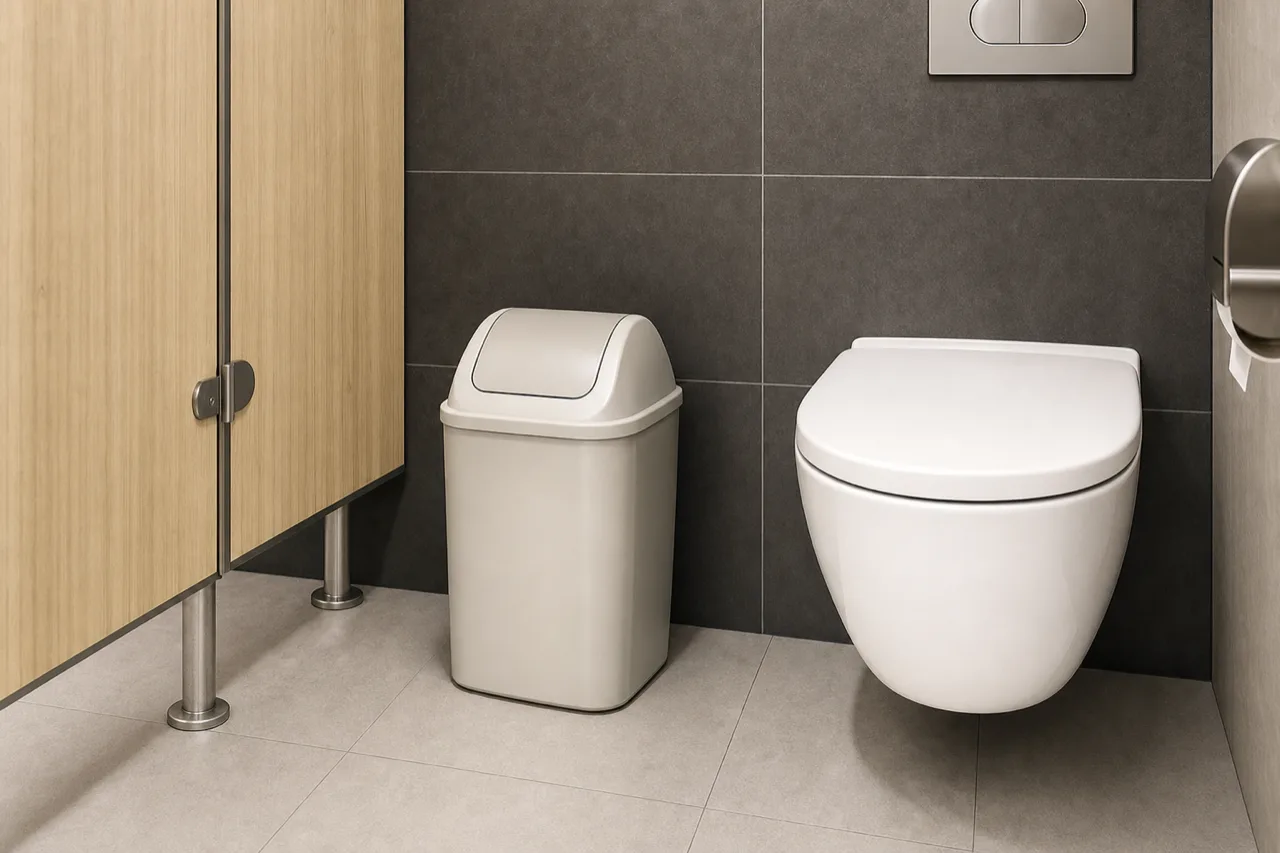
Bin format follows washroom traffic: slimline 12–15 litre units suit standard office stalls, 20–23 litre floor units carry high-traffic locations, and compact wall-mounts preserve transfer space in accessible stalls. Every unit is covered, lined and hands-free, and every stall gets one. A shared bin outside the stalls pushes waste into the plumbing instead. Service is full-unit exchange on a logged cycle: the sealed unit leaves, a sanitised one arrives, and the washroom never hosts open waste. Fill levels recorded at each visit tune the cycle to real usage, which is how the schedule stays matched to the building instead of to an estimate.
Three formats, one standard
How disposal bins are serviced
Everything we supply rides one route visit rather than separate vendor trips. A technician arrives on a fixed cycle, typically every 2 to 4 weeks, tightened to 2 weeks in high-traffic sites and relaxed toward 8 or 13 weeks in quiet ones, exchanges or restocks the unit, checks levels in the same washroom while they are there, and files a dated record per washroom the same day. That log is what turns a supply arrangement into demonstrable compliance: it shows what was delivered, when, and at what fill level, which is exactly what a facilities review or a labour affairs officer asks to see. Frequency is set from your real fill data after the first two months, not from a template.
Choosing the right specification
Specification follows washroom traffic rather than floor area, which is the single most common sizing mistake we correct on takeover. Count the toilet stalls, not the rooms: coverage is per stall, including accessible and single-occupancy washrooms, because a shared unit outside the stalls pushes waste into the plumbing instead. Standardising one format across a portfolio pays off at restock time. One liner size, one parts inventory, one key. And the small savings from a mixed fleet rarely survive the added handling. Product cost across an office population runs about $1–3 per employee per year, so the decision that moves your invoice is service frequency, not product line.