Restocking thatnever misses
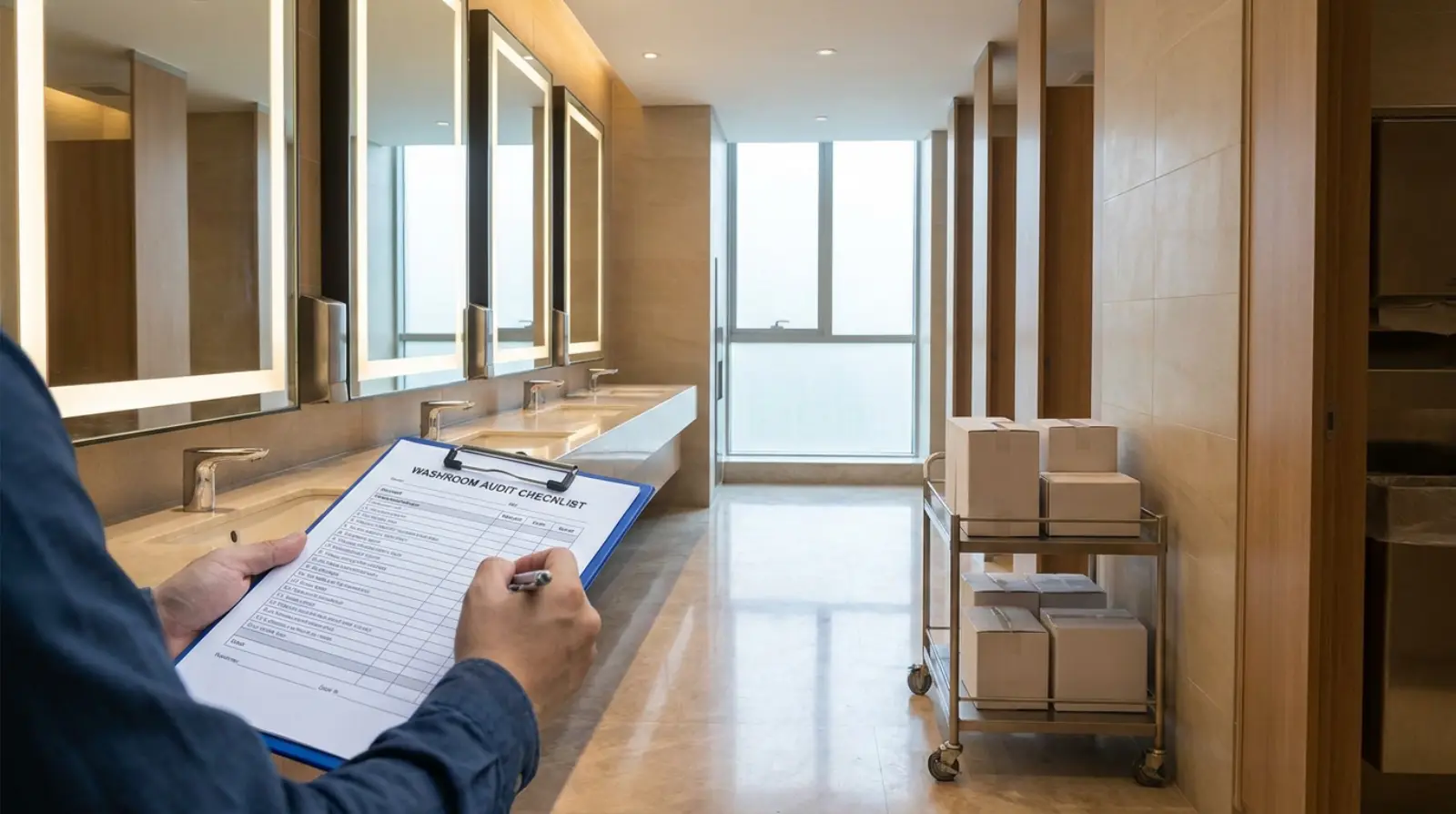
Washroom restocking is a route-based service from Tampons.ca, delivered on fixed cycles with a per-washroom record filed since day 1. Scheduled restocking so nothing runs out between visits. Usage tracked per washroom, per site. And the schedule tightens or relaxes with the data.
The service, in detail
The run-out problem, solved with data
Every restock visit logs what was refilled and how empty it was. Two months in, that data sets your real frequency, per washroom, not per building. High-traffic floors get more visits; quiet ones stop paying for them.
Starting frequencies
Set per washroom after the site walk, then tuned on real data.
Questions about this service
Whatever your washrooms consume, on a list we fix together at setup: tampons and pads for the dispensers (conventional, organic or both), liners for the sanitary bins, and optionally the adjacent consumables, soap, paper, air-care. If you want one vendor covering the room. Each visit logs what went in, per washroom, so consumption becomes data: which locations burn stock, which barely move, where the schedule should tighten or relax. The list is a schedule annex, not a contract term, adding a product or a washroom is an email, and seasonal adjustments (summer shutdowns, January surges) are built into the cadence rather than billed as changes.
Yes, restocking stands alone wherever you already have disposal handled or run your own units. The economics just favour combining: a restock-only visit carries the full route charge, while a combined visit shares it across services, so restock-only pricing sits closer to disposal-included pricing than most buyers expect. Operationally the products also interact. The technician refilling a dispenser is looking at the bin anyway, and fill-level intelligence from one service sharpens the schedule of the other. We will quote restocking alone without any bundling pressure. The numbers usually make the combination argument themselves when the first renewal conversation comes around.
On a dense urban route, an off-schedule top-up typically lands within one or two business days. Your site already sits between other stops, so the marginal visit is a detour, not a dispatch. Report it to the service desk (or your technician directly; accounts get the route contact) and the visit is logged like any other. The more important machinery is preventive: every run-out automatically tightens that washroom's cadence one step, and the refill-to-full rule with a one-third buffer means a single spike week should never empty a dispenser in the first place. Repeat run-outs at a properly-cadenced washroom are our failure to fix, not yours to manage.