Dispenser unitsbrand-neutral
What sits inside a wall-mounted unit, how to size one, and why free-vend became the default. Scroll to take the unit apart.
Dispenser choice decides most of a program's complaint volume before the first refill. Twin-column units vending tampons and pads separately hold roughly double the stock of combination units, keep one empty product from emptying the washroom's whole supply, and jam less because each column handles one product shape. We supply and install surface-mount and recessed formats, convert existing coin units to free-vend where a kit exists, and standardise portfolios on one model so restocking needs one key, one refill format and one parts inventory. Every unit we install lives on a logged route from the day it goes on the wall.
Picking the right unit
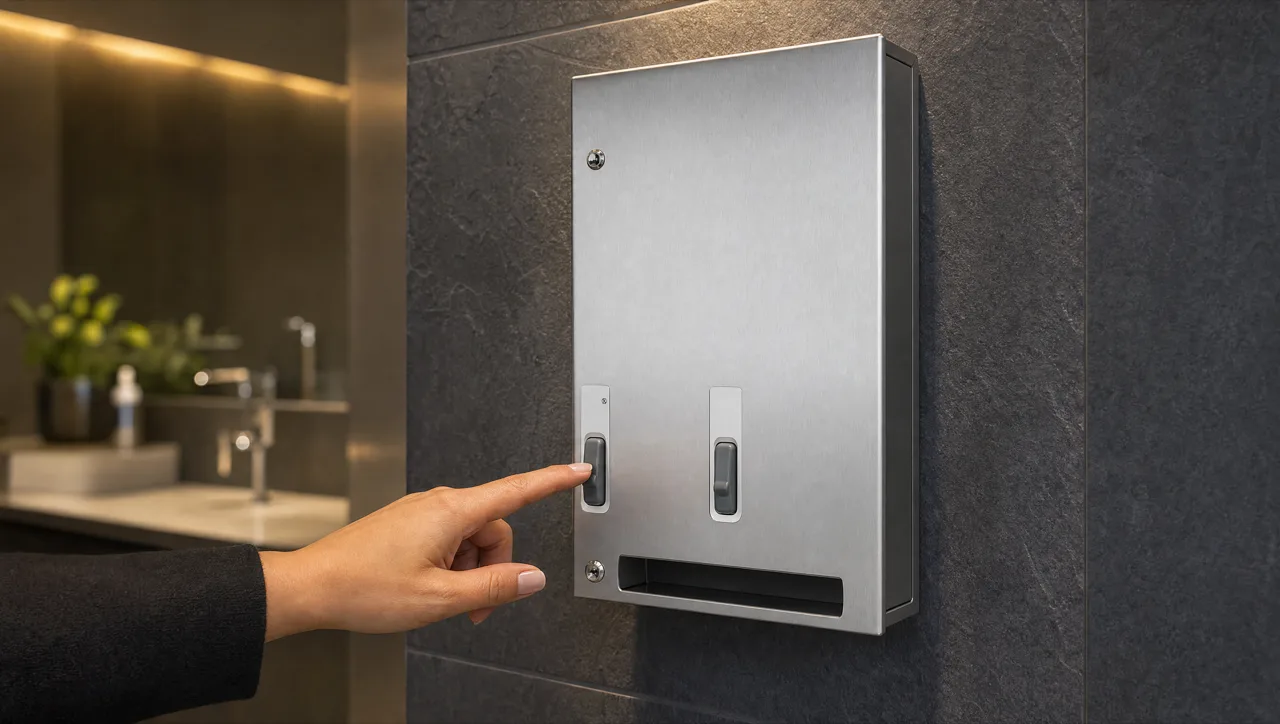
How dispenser units are serviced
Everything we supply rides one route visit rather than separate vendor trips. A technician arrives on a fixed cycle, typically every 2 to 4 weeks, tightened to 2 weeks in high-traffic sites and relaxed toward 8 or 13 weeks in quiet ones, exchanges or restocks the unit, checks levels in the same washroom while they are there, and files a dated record per washroom the same day. That log is what turns a supply arrangement into demonstrable compliance: it shows what was delivered, when, and at what fill level, which is exactly what a facilities review or a labour affairs officer asks to see. Frequency is set from your real fill data after the first two months, not from a template.
Choosing the right specification
Specification follows washroom traffic rather than floor area, which is the single most common sizing mistake we correct on takeover. Count the toilet stalls, not the rooms: coverage is per stall, including accessible and single-occupancy washrooms, because a shared unit outside the stalls pushes waste into the plumbing instead. Standardising one format across a portfolio pays off at restock time. One liner size, one parts inventory, one key. And the small savings from a mixed fleet rarely survive the added handling. Product cost across an office population runs about $1–3 per employee per year, so the decision that moves your invoice is service frequency, not product line.